


A sloped driveway creates challenges that a flat driveway may never experience. Vehicles need reliable grip while climbing, braking, and turning, while rainfall must move down the slope without damaging the pavement or washing out the edges. Choosing the right driveway material can therefore affect safety, durability, maintenance, and long-term performance. One option worth considering is tar and chip paving, which combines asphalt binder with stone aggregate to create a textured driving surface.
For homeowners researching tar and chip mount airy, the exposed aggregate texture can be particularly useful when a driveway has a noticeable slope. Compared with a smooth asphalt surface, tar and chip provides additional surface texture that can improve tire grip while still delivering a paved, durable driveway.
However, traction is only part of the equation. Proper drainage, base preparation, aggregate selection, slope, and professional installation all influence whether tar and chip is the right choice for a particular property.
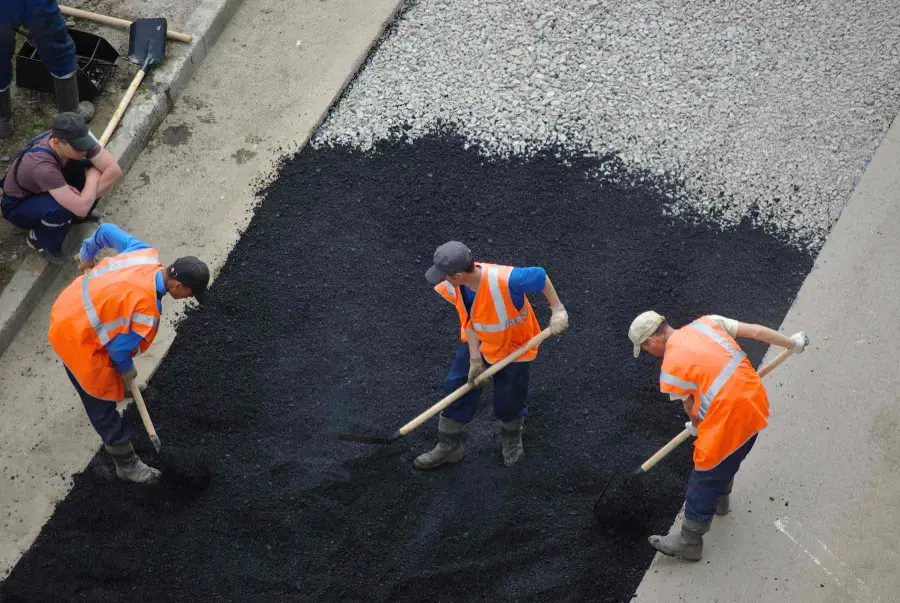
What Is a Tar and Chip Driveway?
A tar and chip driveway, sometimes called chip seal or chip and seal, combines liquid asphalt and stone aggregate.
The paving process generally begins with a properly prepared and compacted base or a suitable existing pavement. Asphalt binder is applied to the surface, followed by a layer of crushed stone. The aggregate is then compacted into the binder to create a durable, textured finish.
Depending on the project and specifications, additional applications may be used.
Unlike regular asphalt, which typically creates a smooth and uniform surface, the finished tar and chip surface exposes much of the stone texture.
That difference is important on a sloped driveway because the texture of the surface can provide tires with additional grip.
Why Tar and Chip Improves Traction on a Slope
Traction depends partly on the interaction between a vehicle’s tires and the driveway surface.
Smooth asphalt can provide dependable performance when properly constructed, but tar and chip has a noticeably more textured surface because of the exposed aggregate.
The stone creates small variations across the driveway surface rather than the relatively smooth finish associated with standard asphalt.
This texture enhances traction when vehicles:
- Accelerate uphill
- Brake while descending
- Navigate curves
- Turn into a garage
- Travel during wet conditions
- Move slowly on steeper sections
That does not make any driveway completely slip-proof. Weather, tire condition, vehicle speed, ice, snow, debris, and driveway grade all influence traction.
Still, the aggregate texture is one reason tar and chip can be an attractive driveway option for certain steep driveways.
Why Surface Texture Matters on Steep Driveways
Imagine driving uphill on two surfaces.
One has a smooth, consistent finish. The other has embedded crushed stone that creates a rougher texture.
The second surface gives the tire tread more texture to interact with as the vehicle moves.
This becomes particularly useful when vehicles must accelerate from a stop on an incline.
The same principle matters when traveling downhill. Drivers need controlled braking without unnecessary wheel slip.
A textured finish can therefore provide a practical advantage on sloped residential driveways, rural roads, and private road applications where traction is a priority.
What Happens During Wet Weather?
Heavy rain adds another challenge to a sloped driveway.
Water naturally travels downhill, and an incorrectly designed driveway can direct heavy rainfall across the pavement in damaging ways.
A tar and chip surface provides texture, but it does not eliminate the need for drainage.
The driveway should be designed so water moves away from vulnerable areas rather than pooling, eroding the base, or flowing beneath pavement edges.
Effective drainage may involve careful grading, appropriate cross slopes, swales, ditches, drains, culverts, or other site-specific solutions.
A paving contractor should examine how water travels across the property before beginning the paving project.
Drainage Is Just as Important as Traction
A durable driveway needs both traction and water management.
This is especially important on a slope because runoff can move quickly during heavy rainfall.
Uncontrolled water may:
- Erode driveway edges
- Wash away supporting gravel
- Enter cracks
- Weaken the base
- Create ruts
- Damage adjacent landscaping
- Create low spots
- Contribute to pavement deterioration
For this reason, drainage should be considered during the initial installation process rather than after problems appear.
Even a high-quality tar and chip driveway can experience premature deterioration if water continually undermines its foundation.
Base Preparation Determines Long-Term Performance
The visible stone receives much of the attention, but what is underneath the driveway may be even more important.
Proper base preparation provides structural support for the finished pavement.
A new driveway may require excavation, grading, installation of suitable aggregate, and compaction before the surface is applied. An existing gravel or asphalt driveway must also be evaluated before crews pave over it.
A stable layer of gravel can provide a strong foundation when properly constructed and compacted.
If the existing base contains soft areas, deep ruts, poor drainage, or unstable material, simply covering those problems with hot asphalt and aggregate will not permanently fix them.
Can Tar and Chip Be Installed Over an Existing Asphalt Driveway?
In some situations, yes.
An existing asphalt driveway may provide a suitable foundation if it remains structurally sound.
Before resurfacing, a contractor should look for:
- Structural cracks
- Potholes
- Rutting
- Depressions
- Drainage problems
- Edge failure
- Base movement
- Previous failed repairs
Localized damage may be repairable before the new surface is installed.
Widespread pavement failure is different. Tar and chip should not be treated as a way to hide serious structural problems.
An asphalt overlay, reconstruction, or other repair method may be more appropriate when the existing driveway is in poor condition.
Tar and Chip vs. Asphalt for a Sloped Driveway
The tar and chip paving decision often comes down to how the homeowner prioritizes traction, appearance, maintenance, cost, and surface smoothness.
Traditional asphalt creates a dark, relatively uniform surface. It is widely used for residential driveways and can provide excellent service when correctly designed and maintained.
Tar and chip creates a more rustic appearance because stone remains visible at the surface.
Compared to asphalt, some of its notable characteristics include:
More Surface Texture
The exposed stone produces a rougher texture than smooth asphalt, which can improve traction.
A More Natural Appearance
Homeowners who prefer a rustic or natural-looking driveway may like the appearance of exposed aggregate.
Potentially Lower Upfront Cost
Tar and chip can sometimes have a lower upfront cost than installing entirely new traditional asphalt, depending on base preparation, site conditions, aggregate selection, driveway size, and local material costs.
Less Uniformity
Someone who wants an exceptionally smooth, uniformly black driveway may prefer asphalt paving.
The better material depends on the individual property rather than one option automatically outperforming the other in every situation.
What Is Better for a Sloped Driveway, Resin or Tarmac?
The answer depends heavily on the project.
Resin-bound or resin-based driveway systems and tarmac or asphalt surfaces have different installation requirements, costs, textures, drainage characteristics, and maintenance considerations.
For a sloped driveway, important questions include:
- How steep is the slope?
- How does rainfall drain?
- What is the existing base?
- How much vehicle traffic will the driveway receive?
- What surface texture does the homeowner prefer?
- What materials are appropriate for the local climate?
- How will snow removal be handled?
- What level of maintenance is acceptable?
Rather than selecting a material based solely on appearance, homeowners should have the grade, drainage, foundation, and intended use evaluated.
What Is the Best Driveway Material for a Sloped Driveway?
There is no single best material for every sloped property.
Common paving options include asphalt, tar and chip, gravel, concrete, and other specialty surfaces.
Tar and Chip
Suitable for homeowners seeking a textured, rustic surface with strong traction characteristics.
Asphalt
Provides a smooth, uniform surface and is a widely used choice for residential driveways.
Concrete
Concrete driveways can provide a durable and rigid surface, although design, texture, drainage, joints, climate, and cost should all be considered.
Gravel
Gravel driveways can be cost-effective, particularly for long rural driveways. However, loose gravel can migrate downhill, develop ruts, or require periodic grading.
Tar and chip can offer a middle ground for some properties: more stable and paved than loose gravel while retaining a natural aggregate appearance.
Is Tar and Chip Better Than Gravel for a Steep Driveway?
It can be, particularly when loose aggregate movement is a concern.
A gravel driveway consists primarily of loose or compacted stone. On a significant slope, traffic and heavy rain can gradually move that material.
Tar and chip uses asphalt binder to hold aggregate in place.
That makes the finished driveway fundamentally different from simply spreading another layer of gravel.
However, some loose stone can remain after installation, particularly during the initial settling period. Excess material may need to be swept when appropriate.
If a gravel driveway already has a stable, well-compacted foundation, it may also provide a useful starting point for a tar and chip installation after professional evaluation.
What Are the Cons of a Tar and Chip Driveway?
Tar and chip has advantages, but homeowners should understand its limitations before choosing it.
It Is Not as Smooth as Asphalt
The same texture that improves traction also makes the surface rougher.
If a homeowner wants a completely smooth driveway for activities such as skating, certain recreational uses, or frequent walking, regular asphalt or concrete may be more appealing.
Loose Stone Can Occur
Some loose stone may remain after installation.
A correctly installed surface should not behave like an ordinary gravel driveway, but homeowners should expect a different texture from traditional paving.
Snow Removal Requires Attention
Snow removal equipment should be operated carefully.
Aggressive plowing can potentially disturb exposed aggregate, particularly if the plow blade is set too low.
Repairs May Be More Noticeable
Matching the exact color and texture of older stone can be difficult when localized repair becomes necessary.
It Cannot Correct a Bad Foundation
Tar and chip is a surface system, not a solution for major base failure.
Poor drainage, severe rutting, unstable soil, and structural pavement failure must be addressed separately.
How Does Tar and Chip Handle Hot Summers and Cold Winters?
Seasonal temperature changes affect virtually every exterior pavement.
Hot summers can heat asphalt surfaces considerably, while cold winters introduce contraction, moisture, snow, ice, and freeze-thaw cycles.
A properly constructed driveway accounts for local environmental conditions through material selection, drainage, base construction, and installation practices.
Freeze-thaw cycles are particularly important when water enters cracks or reaches supporting materials.
Water can freeze, expand, thaw, and repeat the process. Over time, this can contribute to pavement movement and deterioration.
Keeping water away from the base is therefore essential regardless of whether a homeowner chooses tar and chip, traditional asphalt, or concrete.
Does Tar and Chip Need Sealcoating?
Tar and chip and conventional asphalt sealcoating should not be confused.
Sealcoating is commonly used as a preventive surface treatment for suitable asphalt pavement.
Tar and chip already consists of asphalt binder combined with aggregate. Maintenance practices for this type of surface differ from those for a standard blacktop driveway.
Instead of automatically applying conventional sealcoating, the surface should be inspected and maintained according to its condition and the materials used.
A worn tar and chip surface may sometimes be renewed with an additional chip seal treatment when the underlying driveway remains structurally sound.
What Is the Best Solution for a Sloping Driveway?
The best solution begins with evaluating the property rather than choosing a paving material from a photograph or price alone.
A professional assessment should consider four major factors.
1. Slope
The driveway grade affects traction, vehicle access, water velocity, and construction.
2. Drainage
Water needs a controlled path away from the pavement and supporting base.
3. Foundation
A durable driveway requires stable, compacted supporting materials.
4. Surface Material
Once the first three factors are understood, homeowners can compare tar and chip vs. asphalt or concrete, gravel, and other paving options.
For homeowners exploring tar and chip fort meade md, having these site conditions evaluated before selecting a surface can help prevent problems that cannot be solved by the final paving layer alone.
Is Tar and Chip a Cost-Effective Choice?
Tar and chip can be a cost-effective alternative for certain residential driveways, particularly when the existing foundation is suitable and the homeowner wants a textured stone appearance.
However, pricing varies according to:
- Driveway dimensions
- Base condition
- Required grading
- Drainage improvements
- Aggregate choice
- Existing pavement
- Repair requirements
- Site accessibility
- Slope
- Number of applications
- Local material and labor costs
A lower initial price does not necessarily make one material the better long-term value.
The paving process must address the conditions underneath the driveway if the homeowner expects lasting performance.
How to Get the Most Durability From a Tar and Chip Driveway
Durability and low maintenance begin with correct construction.
Homeowners can improve long-term results by focusing on:
- Proper base preparation
- Effective drainage
- Correct grading
- Suitable aggregate
- Professional binder application
- Thorough compaction
- Timely repairs
- Careful snow removal
- Controlling runoff
- Periodic inspections
A driveway should also be designed for the vehicles that regularly use it.
Heavy trucks, trailers, frequent turning, and other demanding traffic patterns may require additional structural considerations.
Frequently Asked Questions About Tar and Chip on Sloped Driveways
Does Tar and Chip Provide Better Traction Than Smooth Asphalt?
The exposed aggregate creates a more textured surface than conventional smooth asphalt. This can enhance traction, which is one reason the material may be considered for sloped driveways.
Is Tar and Chip Good When a Driveway Is Wet or Snowy?
The textured finish can provide useful tire grip, but no paving surface eliminates the hazards associated with water, snow, or ice. Drainage, snow removal, tire condition, and safe driving remain important.
Is Tar and Chip Good for a Very Steep Driveway?
Potentially, but very steep driveways require careful site evaluation. Grade, drainage, base stability, curves, vehicle access, runoff, and installation feasibility should all be considered.
Is Tar and Chip More Durable Than Gravel?
The asphalt binder holds stone in place, creating a more stable paved surface than ordinary loose gravel. Actual lifespan depends on construction quality, traffic, drainage, weather, and maintenance.
Does Tar and Chip Look Like Asphalt?
Not exactly. Standard asphalt has a smooth, dark, relatively uniform appearance. Tar and chip displays exposed stone and usually has a more natural or rustic character.
Can an Old Driveway Be Resurfaced With Tar and Chip?
An existing driveway may be suitable if the foundation remains stable. Cracks, potholes, drainage failures, and structural problems should be evaluated and repaired before resurfacing.
Improve Traction on Your Sloped Driveway With the Right Paving System
A steep or sloping driveway requires more than simply choosing between asphalt, concrete, or gravel based on appearance. Traction, drainage, base strength, weather exposure, vehicle traffic, and installation quality all contribute to how well the finished driveway performs.
Tar and chip paving can be a practical and durable solution for suitable sloped driveways because the embedded stone creates a textured surface that enhances tire grip compared with a smoother pavement finish. It can also provide a rustic appearance that works particularly well for long residential driveways, private roads, and properties where homeowners prefer the look of natural aggregate.
The key is proper construction. Even the best surface material will struggle when installed over a weak base or where heavy rainfall is allowed to erode the pavement foundation.
If you are considering a new driveway, resurfacing an existing surface, or looking for better traction on a sloped driveway, Got Paving can evaluate your pavement, grade, drainage, and paving options to help determine the right approach for your property.
Call Got Paving at (410) 672-3333 to discuss your paving project and request an estimate for a professionally installed tar and chip driveway.


