


A commercial parking lot is a major investment, and its lifespan depends on more than the quality of the asphalt. Water is one of the biggest threats to pavement because it can collect on the surface, enter cracks, weaken the base, and contribute to potholes and settlement.
For commercial property owners in Gambrills, proper grading and drainage should be considered essential parts of the paving system. When planning parking lot paving Gambrills, drainage should work together with the asphalt surface, aggregate base, curbs, catch basins, and surrounding property.
Understanding how drainage protects asphalt can help property managers reduce unnecessary repairs and get more value from their pavement.
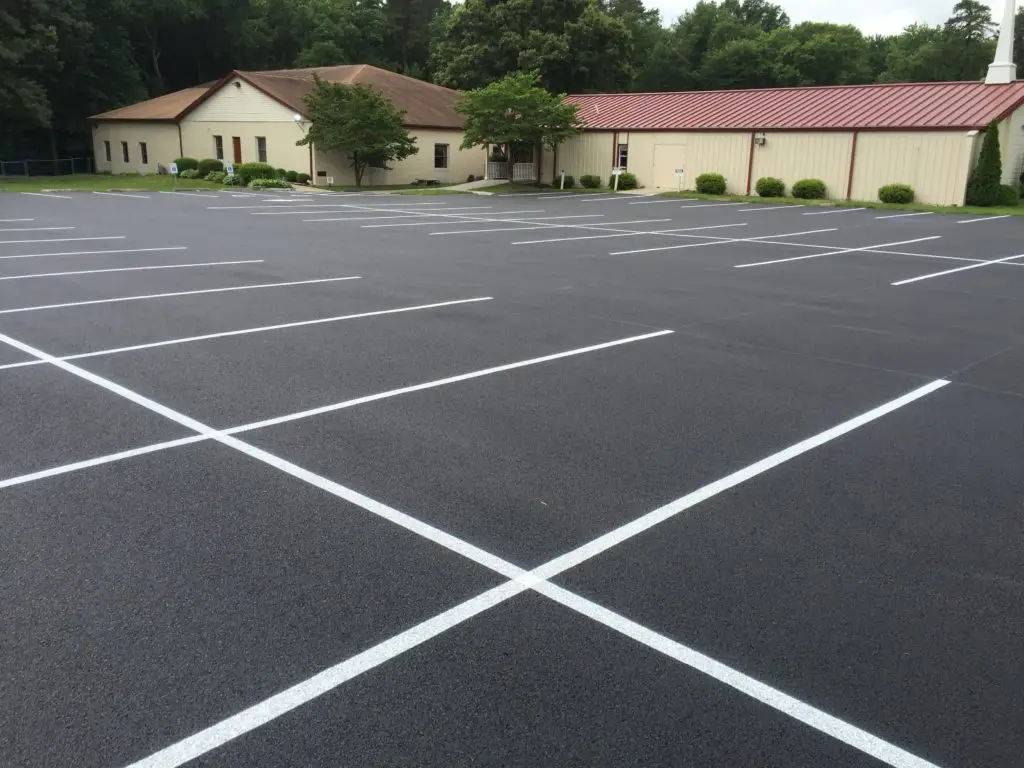
Why Parking Lot Drainage Matters
Asphalt is designed to withstand vehicle traffic and normal weather exposure, but persistent water can gradually weaken the pavement.
The visible asphalt surface is only one part of the parking lot. Beneath it are aggregate and subgrade materials responsible for supporting traffic loads. When water enters through cracks, damaged edges, joints, or other openings, these supporting materials can become saturated and unstable.
Vehicles repeatedly passing over weakened areas can cause pavement movement. Over time, cracking, depressions, rutting, and potholes may develop.
Effective drainage helps prevent this process by moving stormwater away before it can cause extensive damage.
Proper Grading Directs Water Away
Good drainage starts with proper parking lot grading.
Before asphalt is installed, the site should be prepared with elevations and slopes that direct runoff toward appropriate drainage locations. This is commonly called positive drainage.
Depending on the property, runoff may be directed toward catch basins, curb openings, gutters, trench drains, swales, inlets, or stormwater systems.
Without adequate slope, water can settle into low areas instead of leaving the pavement. These puddles may eventually contribute to surface deterioration and water infiltration.
Grading must also account for nearby buildings, sidewalks, entrances, landscaping, and adjacent properties. Simply creating a slope is not enough—the water needs somewhere appropriate to go.
Drainage Protects the Pavement Base
One of the biggest benefits of effective drainage is protection of the materials beneath the asphalt.
A strong aggregate base distributes vehicle loads and supports the pavement above it. When water reaches that foundation and remains there, the supporting materials may lose stability.
Traffic then places additional stress on the weakened area.
Eventually, the parking lot may develop cracking, rutting, potholes, depressions, edge failure, or localized settlement. Repairing only the visible surface may provide temporary improvement, but the damage can return if water continues weakening the foundation.
That is why recurring asphalt failures should be evaluated for potential drainage problems.
Standing Water Is an Important Warning Sign
Some water immediately after heavy rain is not necessarily evidence of a serious problem. However, puddles that repeatedly remain in the same locations deserve attention.
Persistent standing water may indicate insufficient slope, pavement settlement, blocked drainage structures, low spots, base movement, or improper original grading.
Property managers should inspect their parking lots after significant rainfall and note where water remains.
Changes are especially important. If an area that previously drained correctly suddenly begins collecting water, pavement settlement or a drainage obstruction may have altered the original flow.
Addressing the cause early may prevent a relatively small drainage issue from contributing to larger pavement repairs.
Catch Basins Must Work With the Pavement
Having catch basins or storm drains does not automatically mean a parking lot drains properly.
Water must be able to reach those structures.
If a catch basin sits higher than the surrounding pavement, runoff may collect around it instead of entering the drain. Settlement can also change pavement elevations over time and interfere with drainage.
Catch basins and inlets may become clogged with leaves, sediment, trash, dirt, mulch, gravel, and landscaping debris.
Routine inspection and cleaning can help keep drainage structures functioning as intended.
Poor Drainage Can Increase Repair Costs
Repeatedly repairing asphalt without addressing the source of the damage can become expensive.
Consider a low area where stormwater regularly collects. Water penetrates the pavement, weakens the base, and a pothole develops. The pothole is patched, but the drainage problem remains.
Eventually, the repaired area may fail again.
Instead of repeating the repair cycle, a paving contractor can determine whether the area needs grading correction, drainage improvements, base repair, or catch basin adjustment.
Correcting the underlying problem can help protect surrounding pavement and reduce unnecessary maintenance.
Drainage Should Be Addressed Before Repaving
The ideal time to evaluate drainage is before new asphalt is installed.
A professional paving contractor can inspect existing elevations, low areas, subgrade conditions, drainage structures, curbs, surrounding grades, and stormwater outlets before developing a paving plan.
Existing problems can then be corrected instead of being covered by new asphalt.
Property owners considering parking lot paving Fort Meade MD should follow the same principle. Drainage and grading should be incorporated into the project from the beginning rather than addressed after standing water appears.
Common Parking Lot Drainage Solutions
The correct drainage solution depends on what is causing the problem.
Low or improperly graded areas may need resurfacing or reconstruction to establish better slope. Catch basins may need adjustment if their elevations prevent runoff from entering efficiently.
Some properties may benefit from additional inlets, trench drains, swales, or other drainage improvements. Damaged curbs and gutters may also require repair so they can properly direct water.
When moisture has already weakened the pavement foundation, contractors may need to remove the failed asphalt, replace unstable material, compact the base, and rebuild the affected section.
Effective repairs focus on correcting the cause rather than simply covering visible damage.
Parking Lot Maintenance Supports Good Drainage
Even a well-designed drainage system requires ongoing attention.
Property managers should keep catch basin grates and curb openings clear, remove leaves and sediment, inspect pavement after major storms, monitor low spots, repair significant cracks, and address potholes before they expand.
Pavement edges should also be monitored for erosion. Runoff can wash away soil or aggregate supporting the edge of the asphalt, eventually contributing to cracking or failure.
Routine inspections make it easier to identify drainage changes before they become major problems.
Sealcoating Cannot Correct Poor Drainage
Sealcoating can help maintain suitable asphalt surfaces, but it cannot correct drainage or structural problems.
If water pools because pavement elevations are incorrect, sealcoating will not change the slope. It also cannot rebuild a saturated base, repair subgrade failure, or reposition an improperly elevated catch basin.
Drainage and structural problems should therefore be addressed before preventive surface treatments are applied.
Protect Your Gambrills Parking Lot With Proper Drainage
Proper drainage extends the life of parking lots in Gambrills by protecting both the asphalt surface and the supporting materials underneath. Effective grading moves rainfall toward designated drainage areas, while functional catch basins, curbs, and inlets help keep stormwater from remaining on the pavement.
Ignoring persistent standing water can contribute to cracks, potholes, settlement, base deterioration, and repeated repair expenses.
If your commercial parking lot has recurring puddles, potholes, uneven pavement, or other drainage concerns, Got Paving can evaluate the existing conditions and recommend appropriate paving, grading, drainage, or asphalt repair solutions.
Call Got Paving at (410) 672-3333 to discuss your Gambrills parking lot and develop a paving plan designed to support effective drainage and long-term pavement performance.


